Posted in The Publications

A Series of Social Change (Part 3)

We started here, fell back ten years, and now we explore the wild transitional period that was the shift of the 1970s to the 1980s, the next great shift in interest on our retrogressive timeline (There’s a lot of love for the 90s, but relatively speaking, this was a calmer decade).

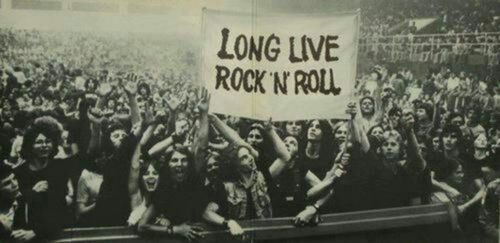
Where do we start? Punk was in full swing to compete with the disco fever that the world was experiencing. Classic rock was reaching another peak. Empowerment and Pride were still the tools to use for previously suppressed groups (like the stereotype of mid-century housewives and the injustices toward people of color) to ensure they felt comfortable in their skin, not beneath others. People began swapping their wildly colorful, bell-bottomed garb for shoulder pads and teased hair.  It was during this period that is characterized by a backlash against liberal movements in public policy. This is the origin of far-right movements that introduced the rhetoric of “the people against big government.”

At the same time, environmental concerns were being brought to light, including the first celebration of Earth Day in 1970. In regards to women’s right “They began to build feminist communities and organizations of their own: art galleries and bookstores, consciousness-raising groups, daycare and women’s health collectives (such as the Boston Women’s Health Book Collective, which published “Our Bodies, Ourselves” in 1973), rape crisis centers and abortion clinics” (History.com). We cannot ignore the elephant in the room for this decade, war protests against American involvement in Vietnam. With a draft, and massive losses on both sides as a result of America entanglement, the protests were part of a mass social movement against a war that put the most vulnerable populations at risk of dying overseas.

http://www.history.com/topics/1970s

Posted in The Publications

A Series of Social Changes (Part 2)

Welcome to our second installment of Social Changes! Just as a recap, the only way we experience revival in trends and traditions is after social changes motivate us to reflect on our lives. So, in honor of all the changes that bring us to our lives today, we decided to write about all the major eras of mass movements in 20th century America.

This week, we will be focusing on Y2K! There were technology advances and smooth lines, energy efficiency and even a new subculture-gaining-momentum. How can you possibly come up with so much new stuff without somehow having a retro counterpart? In fact, while iPods and shiny new cars all seem like brand-new concepts, the actual technology boom itself already happened in the same fashion once before. Subcultures like Steampunk and Grunge (yes, even grunge) emerge the same way that flappers and beatniks once did to challenge the mainstream culture of each respective era.

So regarding Y2K: Lots of things were bubbling over. The internet itself was becoming more and more popular and less and less dial-up. Technology and media were entering a surplus situation where users experienced mass web accessibility. Anyone could get online and use a search engine to find information on almost anything. Ironically, while the internet itself was a new commodity for the public, the idea of mass media distribution was also a plagiarized idea from the moment in history where the printing press was made for commercial use.

The idea of countercultures or subcultures within a larger society wasn’t new either. In fact, for every mainstream group, there will be individuals who prefer unique living. Countless comparisons exist throughout the greater part of history broadly. For the earlier segment of the 1900s, this included the beatniks (predecessors of the hippies), flappers that challenged conservative views, hippies that challenged pretty much every aspect of traditional lifestyles in America, and so forth. But, we will get there. Steampunk and Grunge countercultures were just the popular nonconformist trends of the 2000 decade. Their overall tastes were in dark, rock n’ roll styles and later-emerging Steampunk features Victorian derivations and intricate designs in a punk-rock fusion.

The 2000 decade was also known for change in that the protests continued for environmental protection, saving whales, and the drive began building for a later Occupy Wall Street as the minimum wage began to rise by minimum increments. Protests also evolved to include members through invitations on social media platforms, making the turnout for these events exponentially larger. Take, for instance, the women’s march on Washington as being one of the recent examples of this evolution. The showing of people for such the event outnumbered those who attended the presidential inauguration of 2017. The effect of mass media onto protests also made their efforts (the earliest of their kind being in the early to mid-2000s) more available to potential supporters.

Tune in next week for another installment of the Series of Social Change, brought to you by the Retro Revival Blog. Stay curious, darlings!

Posted in The Publications, The Trials of Doris

Is Duke Farms Avoiding History Discussion? Online Timeline Disappears from DFF Website

We at the Retro Revival admit that history is sometimes a gruesome thing. Seriously- take a look at Hernan Cortez and his obliteration of the Aztec culture, the history of slavery in the United States, or even the recent chapters surrounding violence at the Dakota Access Pipeline. There are hundreds of thousands of accounts of history that each have a given topic phrased uniquely; some go as far as using ‘alternative facts’ and opinions that drastically skew the truth. The worst of all tampering occurs when people deliberately or inadvertently omit factual information. Whether they believe it is unimportant or otherwise, removing tidbits of information can dramatically change the way we learn.

Read this for context:

Aprons are significant because they’re an amenity. Ladies should wear dresses that make them feel radiant with an apron over top because it is a protective look that is both stylish and convenient around the home. Pockets for all the things a woman needs often come included.

Let’s take a look at this paragraph from an old blog post:

What’s more important to the vintage consumer in 2015 is what the significance of an apron is. These garments are both an amenity and a convenience. Everything we purchase today requires a purpose. The apron is now stylish, and protects your equally stylish wardrobe, for one. Any stains that are otherwise cause a total wreck no longer warrant fear. So ladies, wear that dress that makes you feel radiant just because! Handsome gentlemen, indulge yourself in that classy sweater or those contouring cotton shirts with buttons intentionally missing! The apron will forever protect you. Aside from the culinary implications, aprons are also one of the very few garments I’ve found whose pockets are large enough for the smartphones not to fall out of. Girl jeans suck at this in comparison (I’ve heard boy pockets aren’t nearly as phone prejudiced). The authentic vintage ones are exceptionally roomy for whatever other treasures you need to hold close.

Pretty different right? Can you imagine what history books would look like without accurately explaining the significance of slavery or the Holocaust, or even forgetting to talk about Betsy Ross or Abraham Lincoln? Who has ever learned about the Industrial Revolution without hearing the name Carnegie or Rockefeller? Now we are getting somewhere…

So now we have the ongoing lack of transparency at the Duke Estate, (no that didn’t stop just because the mansion was razed in 2016). What threat are they posing by modifying or omitting an entire section of the property’s history? Just because a mission statement doesn’t explicitly include history does not make it ethical, moral, or excusable to eradicate the events and creation that occurred within the stone walls. Check out their new website here: DukeFarms.org/ With the assistance of my colleagues, we were able to dig into the information shared versus the information available; summarily we found a couple inconsistencies. So here’s what’s specifically missing that contributes to the land:

Let’s start with the obvious: There’s no tab here for history accessible from the homepage. If you recall a while ago we posted an updated and comprehensive Duke family and DFF timeline (found at https://retrorevivalblog.com/2016/05/18/the-comprehensive-honest-duke-family-estate-timeline/). Well fortunately for you all we have screencaps from when we made that article, and our history and will be keeping the history (the good, the bad, and the ugly) of the DFF and DDCF alive.

What is also rather stifling on this version of their website is their use of the term ‘maintain’ as it pertains to volunteers who could give their time to take care of ‘preserved’ areas. This leaves us all with some serious food for thought in the form of questions, much like any of our visits to the estate. First, what areas are restored? Next, why isn’t the whole property restored? Are you intending on working toward that? Or will there be more cherry-picking? Finally, why don’t you use that community engagement in the form of volunteers to restore other locations across the property to have a fuller effect of historic preservation among an environmental esplanade? We are definitely staying curious as things heat up once again at the Duke Estate! Stay tuned and raise awareness!

Posted in The Publications

The DeviEver Legend of Fuzz Pedal

This pedal was a unique acquisition of mine almost a year ago, and it has taken a very special place in my heart (and in my special effects cupboard). It stays at home for a few reasons, first and foremost it is very difficult to reign in in a live setting. the volume control going from the 8 o clock position to the 9o clock position has a nearly 10 decibel boost, which makes controlling it in a live or practice setting harder. Secondly, this is a character pedal, it has it”s own very unique flavor that goes beyond what a Big Muff Pi, or most other pedals go, and the contour control increases the “broken” sound it has. I personally like cracking the contour and doing double string bends and Nashville bends, resulting in the notes phasing each others waves out which sounds AMAZING (to me) and serves as a unique sound that one has to push any other fuzz much farther. The artwork on this pedal is also worthy of praise on its own, using iconography from the classic “Legend of Zelda” game franchise, hence the name of the pedal and the character of the tone, essentially it is a bit crusher & fuzz. I have used it on guitar solos and it is thought to be “too extreme” depending on the context it is placed in, but it has an irrevocable character to it and for that I love this pedal.

The company is now run by FuzzGoddess and the pedal and its siblings can be found at http://www.fuzzgoddess.com/bit/.

The DeviEver Legend of Fuzz gets a 4/5 losing points for the difficulty in regards to reeling in the great qualities it has for live use.

Posted in The Publications

A Series of Social Changes (Part 1)

The Retro Revival always acknowledges and often emphasizes the many aesthetics of years gone by, and it sometimes seems like we don’t reference the changes that took place over time that molded the society we live in. It is easy to forget why we are reviving concepts of the retro culture in the first place, so we decided to start a mini-series of monthly publications about eras of social change that helped fuel major transitions in American culture. Where better to start our journey than talking about today?

In today’s society, we can observe vehicles of change about nearly everything. In macrocosmic levels, look at the protests that have taken place in the US regarding remaining unrest for the political elections this year for an example of what fuels social change. Persuasion can be identified everywhere to support the needs and wants of the greater majority. But let’s take into perspective a microcosmic, less-political experience: in Harpie’s town, there are debates currently ongoing about the use of local emergency services versus outsourcing. People have actively come out to argue their positions to try and keep local services local, indeed. Another grassroots movement earlier that we all recognize from the site, DORIS, sought after preserving a one-of-a-kind landmark. These are all acting as agents of change. Regardless of context, however; one theme remains constant: these activists want to change the minds of those in charge. They fuel others to think critically about their lives, what programs affect them, and the communities they live in. Collectively, this is what drives changes to our environments.

So let’s examine some classic tactics for instigating change that has been utilized for nearly 200 years. Sit-ins, protests, walks and congregations, petitions, and even legal battles have been waged to help people modify their situations. Take a look at DORIS and their use of almost every method aforementioned, Stand with Standing Rock and their weeks-long sit-ins that captured international attention, Occupy Wall Street in a similar fashion, or even the Justice Democrat Movement which focuses on regulating the party’s standards of conduct. When an activist or group of activists disputes a suggestion or challenges the status quo, using tactics helps gain media attention and the hope for recruiting more like-minded thinkers.

During these arguments, influential figures (most often) try to maintain the simplest, most subjectively compelling circumstances they can. They act in such a way regardless of if it compromises the integrity of sacred land (Standing Rock), public interest (Occupy Wall Street), or even the necessities of life, like water (Standing Rock, most pipelines).

Every single one of these change directives has roots and derivations from past experiences. Standing Rock, for example, has themes back as far as the Battle of Wounded Knee. As baffling as it sounds that in 2017 we are still having fights erupt over land demarcation, it is all the same. Not only does Standing Rock suffer the damages to their land, but we also run a high risk of potential water contamination. Sound familiar? It should: think about Flint, Michigan or the constant problems that the Levittowns experienced in tap water becoming contaminated with domestic washing machine wastes. All these things have some historical counterparts.

Occupy Wall Street is probably an estranged twin of the Tammany Hall corruption ring except in the finance world. The people in lower classes got sick of hearing about higher values of companies that they shared stocks in while their wages and stock values did not see any of the increases that others in the upper echelons bragged about. How are the average people supposed to feed their families when the richest rich don’t feel like sharing? The lack of trickle-down, much like the withheld wealth from Tammany Hall from 1954-1934, serves as a reminder of why these protests are, in fact timeless.

Democrat Justice Movement seems to be instigated as a result of people trying preventative measures against another LBJ tactic. (Author’s note, LBJ [Lyndon B. Johnson] had a reputation for using intimidation against individuals who he felt would challenge his opinions. He would use his imposing figure to stand over other people as they spoke to him while in office). While this seems petty, it has more to do with ensuring that no representative abuses power or oppresses another person or group. In order to prevent acts of bullying or intimidation within the political party, the Democrat Justice Movement seeks to impose higher standards of conduct on the entire party.

Where does the change end? Well that’s easy: changes never end if we continue to strive toward a classic vision of a happy community. Stay curious, darlings.
Posted in The Publications

Revival Style: The Season of the Knits

Chunky cable-knit sweaters, itchy scarves, and pom-pom adorned hats are all things that come to mind when we think of vintage knitting. Winter (and autumn) is the time of year when the knitting needles reappear out of nowhere and suddenly the entire family has the same pair of heavy wool socks from the household knit addict. Cold weather has always been a time of creating new things from a good ball of yarn, but the revival of blissfully warm sweaters and cozy shawls has commenced!

Knitting has a sort of second life these days. What was once the craft of choice for grandmothers and Amish women alike has become a booming industry for whomever is brave enough to pick up a pair of needles. It has been around for generations, and although there was a lull in the craft’s popularity, it has only grown into an empire in the last ten years, roughly.

Especially in the preparation for the two major World Wars, knitting became a way for women to engage in the efforts to support troops overseas. From there, the interest and addiction to knit stayed rather constant. Sometimes, there were declines in the overall numbers of knitters, but in the grand scheme of things, the craft has stayed alive. In the most recent years, (approx. 2009-), knitting has gained serious praise and popularity across the nation once again. Although not fueled by necessity or war efforts, knitting became a stylish method of hobby uptake.

For those who have stigmatized knitting into the ‘chunky, itchy sweaters that great-grandmother used to force on the kids in December’, this classic craft has many different displays of elegance, for both beginners and experts alike. Look at the wares of Forever 21, Macy’s, J.C.Penney’s and other name brand carriers for the rapid marketing of all things knit and nuzzle-worthy. Pair a sweater or capelet with your favorite skirt, long wool socks, or toasty mittens. For the gentlemen, warm socks and felt hats match marvelously for a timeless, shamelessly snug wintry-welcoming outing. Bundle up, darlings!

Posted in Revival Style Guide

Revival Style: ‘Clozy’ Classy & Cozy Coats

Ever wonder how the hell those gorgeous vixens stay warm? Seriously. Take a moment and browse anywhere online or in books to see what vintage ladies couture or fashion looks like. So seldom to we see pantaloons or anything less than a skirt before the 1970s. In an era of timeless, gentle contours in a woman’s wardrobe, we are left with frozen knees and icicles for shins. Or so it seems.

I did a little bit of logical research this month for the Revival Style Guide that traced me to Modcloth.com (Click for link), to the outstanding array of outerwears available from RubyLane.com (Click for link), and back to my own closet collection. What made bare stocking’d legs tolerant of the bitter cold winters of years past? Furthermore, what can we learn about keeping warm and  timeless? Is it really possible? The very, very short answer is yes. Let’s dig in, darlings.

The eyelet lace of a flapper’s 3/4 length shawl drapes roomily from her shoulders. If you’ve ever carried one in your arms, you’ll know these are no flimsy decorations. Usually they were comprised of velvets and wools and whatever it took to bedeck it in sequins or other adornments. These ornate statement pieces are a starch contrast to their post-market crash counterparts. Nevertheless, note the length of the coat itself. The 1930s was a time to establish standards. When you have to strip down to the bare necessities to live comfortably in a disasterous economy, minimalism and need-based design overtakes, respectively. The 40s-inspired coat is relatively similar to the 30s. Culturally, there were many similarities between the two decades in America. Socially… Well, that’s another story.

Let’s fast forward to today. Leggings, chunky knit sweaters, Ugg (ugh) boots. and name-brand athletic-looking coats that have no roots in their design are all rampantly changing the look of winter away from the traditional wares. Whyyyyy would you do that…? Seriously folks why has society fed into paying over $100 for a coat or pair of boots that has no personality? Warm, classy garments don’t have to compromise comfort, either. Take for instance this a-line coat from our darling friends at Modcloth: (Click Here!). Put your Ugh boots on the shelf and pick up something with a bit more flavor this season. I’d bet you’ll find yourself able to wear a skirt underneath these layers without feeling as much as a litle chill.

So yes, longer coats are, in my most humble opinion, a MUST HAVE for every winter. They’re feminine, fierce, and good for pretty much everything. If ever you’ve wanted to wear a lighter outfit to work or just to feel more comfortable but worry about that temperature, I recommend the purchase. Antique stores, vintage-inspired websites, the all-powerful Etsy, Amazon, and even some current store chains all carry a plethora of clozy coats.

Before we conclude that a longer coat is the answer to staying warm, I should also add in a few tidbits that will give additional insight to the age-old qualm of staying warm and tasteful each winter. I took a few Google Image searches of what a ‘vintage winter outfit’ would look like. Primarily, this search revolved around the 40s and 50s: Staples of pop cultural icons here in the West. The good news is, this is exactly what we’re talking about! Note that the stockings involved here were mostly wool, adding extra warmth. Hats, scarves, and those iconic long gloves complete the human toaster effect. The footwear was varied, because just like all of us today, some of us are better or worse at keeping warm on our own. Pay careful attention to the boots of the madame in the blue coat, though. That’s where it’s at.

So here’s the breakdown for the rest of winter in Revival Style: Longer coats! Wool socks or leggings, or just longer skirts. Longer gloves if you can find them. Last but not least, boots with character. Thanks for tuning into the revival style guide- I look forward to sharing the latest of the outdated!


Posted in The Trials of Doris

Trials of Doris: Emptiness

On a whim I opened my laptop today and decided to see what Google Maps looks like around my favorite places to picnic (and then I decided to find new places to go). But before I could follow my own intentions, a big, dirt mound-like space stopped me dead in my tracks. In some last hope, or maybe even remembering a once-mentioned promise from trials past, the silhouette of a billionaire’s home (although imperfect) can be seen amid the environmentally-conscious demolition site at Duke Farms.

I can’t decide if this qualifies as an intended outcome of a senseless demolition or if this can become a respectful headstone to the late Duke Mansion. What now sits as a gravesite of architectural uniqueness, the Duke Mansion’s site has an open ended future IF the foundation begins a dialogue with people outside their circle.

Please let’s not forget. Perhaps I’m showing my age, but let’s remember what the Lorax said (after all, the darling Seuss character “spoke for the trees” so maybe Duke Farms or Charitable Foundation if you’re reading, you’ll listen to him better since he’s more environmental): He placed brick before lifting himself from the wreckage of the truffula trees which read, “Unless”.

screenshot-10
The whole update
screenshot-11
Unless
screenshot-12
A Fond Memory