Posted in The Publications

Antiquated Antics: Fireworks

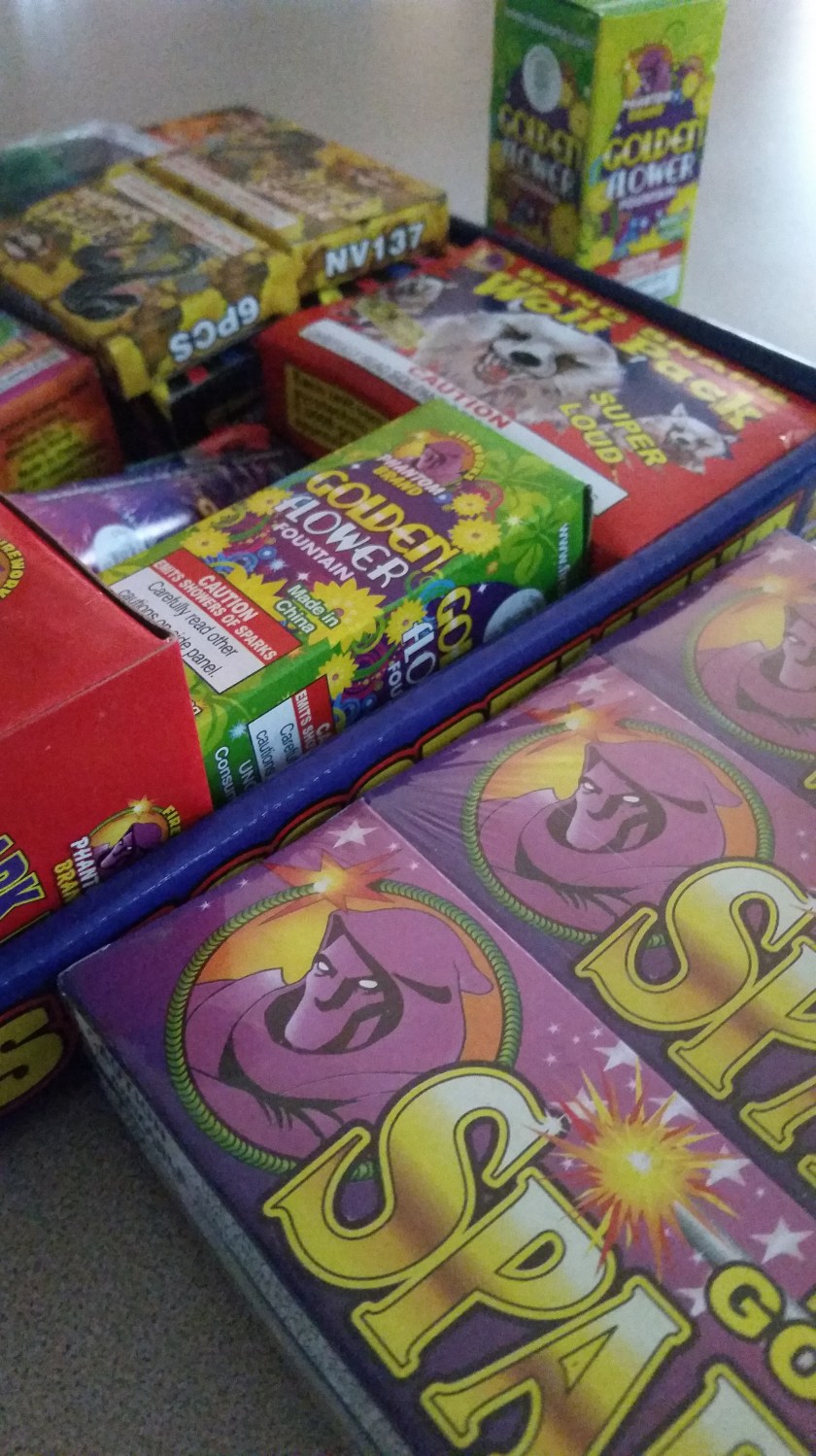
It is summer  2017 and this one is a summer to remember! Just before July 4th, two major political actions took place that changed the way we celebrate. The first pleasant bit of legislation passsed that allowed non-aerial fireworks to be bought and used across the state. (For confirmation of this change, please reference This Article). However, this was coupled with a total government shutdown that followed on Saturday the first of July- leaving state-run beaches and parks abandoned for the holiday weekend. My guess is that in order to avoid total disappointment, the already-spiking number of purchased fireworks in the state is going to double because thousands of families’ plans for this weekend are trashed. Thanks, government.

In the retro spirit of summer celebrations, there is much fun to be had at home; by the pool; or with friends, neighbors, and family. The resurgence of legal fireworks only makes this experience more unique. The last time that non-aerial fireworks were legal here was 1967. So let’s talk Fourth of July; the first round of official antics.

Harpie Lyn here. I had no reason to learn about the fireworks market or what types existed. So going in blind, I went over to Pennsylvania to gather some of the tiniest sparklers I could find that didn’t look menacing. Of course, when I arrive home, my mom has already found a grandiose assortment of fancy, dancing fireworks that dazzled and crackled. She 1-upped me at a local grocery store while I went out to another state to collect what I thought were rare treasures. She was so excited to share this tradition with her own kids and family that my mother almost forgot the groceries she had paid for. For the baby-boomer generation, this is a big deal and a serious wave of nostalgia. Fast forward:

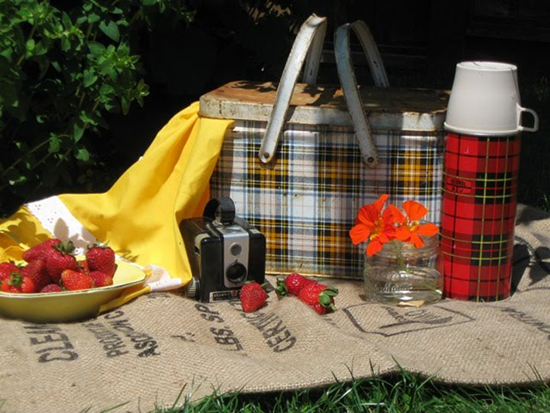
Fireworks themselves aren’t very patriotic. Patriotism is experienced more in respecting veterans and helping thy fellow American… In fact, fireworks are rather unpredictable, smelly, but overall pretty for the few seconds they last. Oh, and some will stain your driveway. For decades prior to the year 1967, sparklers were a staple of how Americans young and old participated in the festivities playfully. In reviewing other celebration methods, I found that fireworks are best coupled with smiling faces, coconut-crusted marshmallows, BBQ food, gingham tablecloths, and fireflies at night.

So are fireworks really worth the hype for your Americana celebration? Yes. If you’re reading this from New Jersey, there’s still time to collect a few NON-AERIAL only fireworks- only those that crackle on the ground- if you want to include them in your festivities. Remember safety precautions and stay curious! Happy fourth from us at RRBlog!
Posted in The Publications

Antiquated Antics: Summer Series 2017

This season was the first of its kind that I found myself without papers to stress over or exams to press for. My dearest colleague and right-hand man, Manny, suggested that I use my new leisure experience to find fun stuff to pass the time. My inner blogger beckons, however… I had mission to find what activities people used to participate in during the solstice season, and these are my findings and what makes them classics.

In this series, Manny and I will report on antiquated funzies ranging from hobbyist herbal gardening, trying homemade recipes for ice cream and oddly-shaped jello desserts with the help of our friends at InTheVintageKitchen, picnicking (of course), attempting a game of croquet (did I even spell that right?), go boating, test out an arcade, try recently-legalized fireworks, and even work with Clicks, the RRBlog’s Kodak box camera. Whatever vintage pastime we can find will end up on our list.

With each new experience, we will do our best to document and discuss for you darlings. If you have a favorite memory from wayback that you’d like us to try out, post it on our facebook page at Facebook.com/retrorevivalist or in the comments section below! Be sure to tell your friends all about us!

Posted in The Publications

Do not be this guy…Things to NEVER do as a musician/ performer 

This month I decided to reflect on our recent experience at a show I performed at. Episode number one of things not to do as a performer or musician. It is so important to stay classy and serve as a model for up and coming musicians. People can lose sight of the masters, the class acts, and the roots of their music if they don’t have reminders of where the etiquette came from in the first place. What I’m about to describe is a personal experience. I bet Sam Cooke, Cab Calloway, and Huey Louis all together never acted like this. Buddy Holly would be frowning.

Posted in The Publications

Recognizing Service to the Retro Community

This Tuesday is the celebration of another of New Jersey’s finest. Earlier this year, Nancy P. was recognized as the individual whose nomination to Preservation NJ made it onto the state’s 10 Most Endangered Historic Sites list. (Read more on this at the Trials of Doris link here: Article Reference)

Since then, her own projects included, the caliber and amount of work that Nancy has given to the preservation nation is being regarded highly with an award for service at the beautifully-preserved Drake House Museum in Plainfield NJ and her work in attempts to save Duke Mansion. Nancy has worked on projects that span across the two counties over the course of many years. Her memoirs of the grassroots DORIS group have been chronicled in the latest book on Doris Duke; The Duchess of South Somerville. Despite everything, it doesn’t seem like she will ever be dissuaded from challenging the odds.

She is a seasoned historian with a passion unparalleled to others.

Congratulations from all of us at the Retro Revival! Don’t ever stop being amazing.

Posted in The Publications

Outrage at a NJ Cemetary

On the morning of May 12th, the news gave me this: http://newyork.cbslocal.com/2017/05/12/cemetery-veteran-markers-removed/

In short, the cemetary in question, which is remarkably large in size, was responsible for removing memorial stones of acknowledgement from war veterans’ graves. Their defense for the act was that it was intended to clean up the property and remove any potential safety hazards that these memorial stones posed to visitors.

I would like to question this. How can a country whose veterans have often paid the ultimate price for our country be disrespected in their final resting place? How is this appropriate in the retro spirit of things? Even for those of our readers who are anti-war, those who have passed away in telling our story as a nation probably shouldn’t be defaced. Really, the dead shouldn’t be disrespected at all. In the ethics of yesteryear, shouldn’t it be acknowledged that these guys and gals shaped our history?

Yet we remove the last real memo of their services that they had. Morally, it’s not congruent with the sense of vintage values our website seeks to suggest (we aren’t pressuring your personal beliefs- that’s not what we are about). But it sure would be nice to show those before us that we are at least learning about their journeys and how they shaped our world.

So it captures the attention of us and our readers. What’s ever been vintage about forgetting the stories of others? Retro and vintage lifestyles preach the opposite. We will be following this story as it becomes clearer.

Posted in The Publications, The Trials of Doris

How History is Quite Green; A Special Pensive Article from the Trials of Doris

Somewhere in the depths of the internet, I remember reading about how someone compared their grandparents’ lifestyle choices to those of modern ‘green’, or eco-friendly living. Usually we at the RRBlog like to take summer as an opportunity to learn and research and experience new old things, like configuring Clicks the camera or traveling with our picnic basket… but this is too good to pass up.

So about this article… In the classic style of Harpie, I have no idea where it was and didn’t think to save it to a file. But here’s the basics: history’s economics have made goods that we take as commodities today the luxuries of yesteryear. Take for instance paper towels: these can be purchased very easily today in almost any store. Back in the 1940s, paper towels were not logical. It is too wasteful to have single-use towels in an average setting.

…So with the ideology in mind from this article, my mind wanders back to where I wander often: The Duke Estate. I envision a place where green living is taught and inspired by historical roots; a revival of sorts in its own league. Picture if you will, a place that is absolutely a nature sanctuary full of species rare and diverse of all kinds, that teaches all about renewable home resources and residential methods of growing foods and spices year round. This is a most exemplary location to teach these and other values like the pricelessness of cultural and artistic features in seamless fluidity with nature’s bounty.

Why is it important to work these parallels? Green living is one of the most powerful shifts that this society is experiencing right now. With the changing of political tides, especially in America, green living is really just a vehicle to illustrate the greater desires we have. I’ve said it dozens of times: our actions and wants reflect a deeper need for wholesome, traditional life (with some new twists). Some of us identify rather strongly with the retro culture already; that is, we actively seek out ways to live a life free of overconsumption or disposables. Others either reject these notions or want something entirely new; but this population might forget that recycling milk glasses and selling rags for cleaning were things of the past. Green may come with new inventions and technologies like wind turbines, but the notion of using things over and over again? Timeless.

The Duke Estate, which runs a similar message, ‘to be good stewards of the land’, should take notice of these parallels. They, of anyone, have the greatest potential to show how eco is antico! Grow pineapples and sell the rinds to the interesting artisans that make it into a new type of biodegradable and sustainable leather or host mid afternoon high society tea with tea leaves harvested in a greenhouse. Teach people the uniqueness of life in an era bygone. Highlight it in green. History may show up in black and white, but there were hints of green in every direction. Stay curious, darlings.

Posted in The Publications

Mic Shootout; Shure Super 55 Deluxe vs. Heil Fin

I recently decided to try out some vintage voiced microphones, and I found myself struggling to find comparison videos between the Heil Fin, and the Shure Super 55 Deluxe. It was at this point that I decided to make the video I needed for that decision process. I had a lot of fun hearing the differences, these retro style microphones are unique in comparison to the modern style performance mics like the Heil PR 35/ Shure Beta 28 microphones. These Microphones have character and style for days (or decades 😉 ). Take a listen and judge for yourself.

Posted in The Publications

A Series of Social Changes (Part 4)

The 1960s are easily “the era” above all others that signifies a serious shift in social living in America and elsewhere. The tremors of these changes could be felt across an international stage, prompting one of the most radical shifts we learn about. The 1960s challenged societal norms of gender roles, war and peace, media and expressive cultures, and conservative lifestyles.

It was a time of tie-dye everything, fringed suede vests, peace protests, equality marches, integration, eliminating stereotypes of wives and women, freedom, music, and counterculture. Frankly, this decade, even in retrospect, is a challenge to keep up with for the simple reason that it is profoundly busy. I ask our readers to forgive me as I simplify and stylize the events of this decade for reader-friendliness.

The 1960’s was an era characterized by two of the greatest populist movements of its time. The buildup and further expansion of the Civil Rights Movement happened parallel with the mass social and political revolution enacted by the American youths, this time period being identified as “The Summer of Love”. The 60’s was building up to the enormous pressure that young people being shipped off to Vietnam for a way that nobody wanted to engage in, and minorities who were fighting for basic rights and social and political equality both felt. The Civil Rights Act has had elements be challenged i the last year, and we are still fighting for the preservation of these BASIC HUMAN RIGHTS.

Posted in The Publications

Kim’s Address Book

As usual, strolling the stately property of Doris Duke has given me new inspiration to write. There is something in the air at that location that infects me with creativity. That, or I can give credit to my darling company from that afternoon. I met Kim through the Trials of Doris, and we instantly became friends. At the time, she lost her cell phone and had to get a new one, which led to quite a conversation about newfangled telephone technology and the real consequences of such devices. If you’re reading this Kim, this one is just for you!

Kim spoke of how much simpler it was when we all had to memorize phone numbers or when the only resort to maintain them was to write them down with pen and paper. So naturally, I start to pick apart the components of numerical memorization in my head and what it must have been like before texting was considered a personable method of communication. The candlestick phones, the lines at telephone boxes, and the well-loved rotary phones… Has the digital age taken away from all this? And since when can someone build up relations with others through typing on a screen. No, emojis won’t convey feelings, regardless of how candid. It was time to go retro for me.

My first step was purchasing an address book from Walgreens for $6. I spent a decent amount of time filling it out, just because of how many numbers I store in my cell phone. Starting on the week of February 1st in 2016, Kim’s honorary address book started to migrate with me wherever I went. Instead of relying on the modern conveniences of typing in an auto-fill name, I spent time trying to type in the entire number of a person to eventually remember which number belongs to whom. Upon further inspection about 10 days later, I realized the repetition of numbers came more easily to me. I wouldn’t have to reference the address book as much for area codes or the last four numbers. By suggestion, my candlestick landline was getting more exercise from this experiment too. So what exactly did it all mean?

For one thing, using a phone book and a landline is a bit less static-ridden. Even in the two minute conversations I hosted, the quality of voice is significantly different on a landline than a cellular connection. What is so appealing about sitting down and talking though? Why are people successfully selling replica vintage telephones (and even modifying originals for today’s phone jacks)? What was so minimally satisfying about remembering phone numbers?

I have a few theories. Foremost, let’s talk numbers. When numbers have relevance, like correlating them with your best friends and family, they are easily remembered. If asked to memorize arbitrary numbers in a sequence, it is hopeless! So by pairing numbers with a good reason to remember them, we are more likely to retain that information. By this cognitive logic, people who grew up using or have used address books in their lives have trained themselves to be better at number retention. Remembering someone is also one of the warmest ways we show we care. It shows that the person took interest, took effort, and that the recipient-of-recollection is valuable. Bravo, darlings!

Another piece of the puzzle is that those who have to speak in order to communicate (versus texting or other nonverbal social media) rob themselves of learning. Without excessive practice hearing others talk and reciprocating, where do we truly hone our skills to create effective dialogue? There is a natural desire for humans to be social creatures, not social media creatures. After a while, we will crave this natural, timeless method of contact. Sure, use the modern commodities, they’re fun! But don’t become dependent on them.

Finally, the charm and aesthetic appeal of telecommunications resonates throughout the 20th century. I found this absolutely chic telephone table at the forever-perfect Somerville Central Antiques store. Similar furnishings have existed to accommodate and make comfortable the telephone and its listener. Unfortunately, we don’e see enough of them!

So the moral of Kim’s address book? Pause. Don’t post all the time. Instead, grab your phone, dial your dear ones, and talk. Fill the void with beautiful chatter and the sounds of life.

Posted in The Publications

A Series of Social Change (Part 3)

We started here, fell back ten years, and now we explore the wild transitional period that was the shift of the 1970s to the 1980s, the next great shift in interest on our retrogressive timeline (There’s a lot of love for the 90s, but relatively speaking, this was a calmer decade).

Where do we start? Punk was in full swing to compete with the disco fever that the world was experiencing. Classic rock was reaching another peak. Empowerment and Pride were still the tools to use for previously suppressed groups (like the stereotype of mid-century housewives and the injustices toward people of color) to ensure they felt comfortable in their skin, not beneath others. People began swapping their wildly colorful, bell-bottomed garb for shoulder pads and teased hair.  It was during this period that is characterized by a backlash against liberal movements in public policy. This is the origin of far-right movements that introduced the rhetoric of “the people against big government.”

At the same time, environmental concerns were being brought to light, including the first celebration of Earth Day in 1970. In regards to women’s right “They began to build feminist communities and organizations of their own: art galleries and bookstores, consciousness-raising groups, daycare and women’s health collectives (such as the Boston Women’s Health Book Collective, which published “Our Bodies, Ourselves” in 1973), rape crisis centers and abortion clinics” (History.com). We cannot ignore the elephant in the room for this decade, war protests against American involvement in Vietnam. With a draft, and massive losses on both sides as a result of America entanglement, the protests were part of a mass social movement against a war that put the most vulnerable populations at risk of dying overseas.

http://www.history.com/topics/1970s