
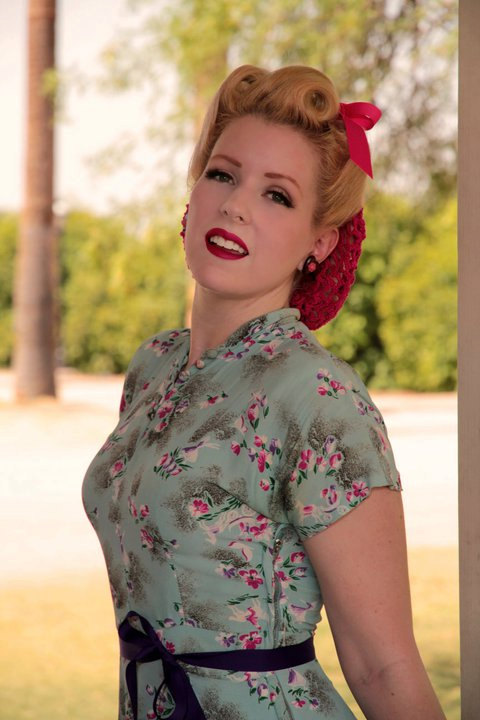
When most people think about the 1950s housewife, the first idea is of a well-dressed, poised woman whose smile beams as bright as the sun against her spotless kitchen floor. For a good percentage of the same people, the second image of the housewife in Midcentury America is sad, oppressed, and suppressed of her sense of self. In many ways, both are accurate and both are inaccurate. The media has remained consistent in its methods of displaying only what’s pretty and idealistic in pop culture and has only recently opened up more fully to the idea of exploiting oppression in exchange for the feminist movement. So this segment will focus on concepts and attributes of the social darling, the icon, and the controversy: the Midcentury Housewife.
Despite rampant sexism, systemic oppression, stringent gender roles, and excruciating social expectations, the housewives of the 1950s were very powerful. I’d never minimize the fact that the conditions surrounding their perceived perfection were emotionally deplorable; but this is the value of revivalism: we can take what positive tidbits we find and use them to inspire a retro future. However, when we use the term ‘midcentury housewife’ we should probably give the date range of around 1929-1970s because of the gradual evolution of the role as it experienced different eras of history to mold itself around. The 1950s is perhaps the most visually iconic, however.
So let’s talk about it! There are several major empowerment components of the housewife. In fact, the capabilities of a housewife were capitalized on for mainstream propaganda, pop culture art, and advertisement back in the day. People did, despite the often sexist behaviors and remarks, identify with the potential of these women. This miniseries will analyze a midcentury madre for her pursuit of perfection, memorable mothering techniques, influence on good housekeeping, as a self-made, home-taught, vocational genius, and for her sophistication in style. Amid all the duties of making a picturesque home and contributing to the greater image of their communities, these women managed multifaceted lives that deserve to be observed as models of powerful work ethic, remarkable grace, and timeless (tireless) tightrope walkers in balancing their lives’ most cherished facets.
Be sure to check back with us in 5 days to get started into the Pursuit of Perfection! Stay curious, darlings~


 The south gate gatehouse is actually news to me, despite it making perfect sense. Likely in attempt to accommodate larger numbers of guests for 2012’s restructuring, the original gate house at this location was taken out in exchange for a pedestrian gate to supplement its wider automatic counterpart. Once again, I have to ask what was so wrong with what was there before. …Probably nothing, but restoration is a scarce commodity.
 Finally I was particularly disturbed when I sought refuge in the women’s restroom behind the coach barn. When I went up the stairs, something made me turn to the right, where my eyes locked on a bright orange rust color. It wasn’t just the color, but the shape that made me stop paying attention to my needs. Within a small fenced-in area, a set of beautifully-crafted gates leaned sideways in a lonesome, tired fashion. There was something familiar about them, although no one in my walking party could place them. From the thorough rust, it was only evident that they were definitely original to the estate. Once again, this begs the question of why, when a nonprofit is as financially loaded as Duke’s, doesn’t it spend the money on restoring these and reusing them to maintain originality and design? If we slowly replace or redesign the elements that make a property unique, we will be left with no original fabric of it’s intricately-woven tapestry of landscape features and components.
 Retro Curious Rebellious: The Revival