Posted in The Publications

The Modern Levittowns

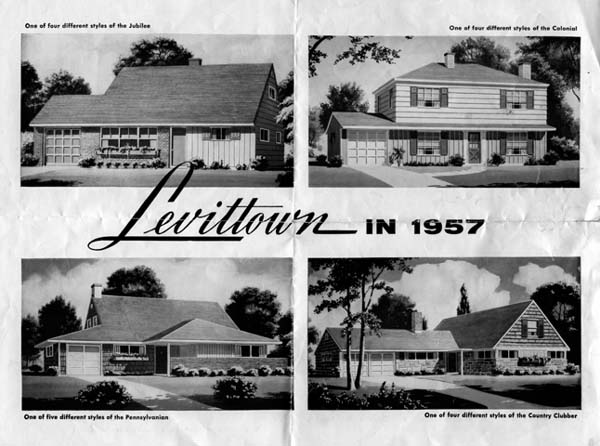
So I get back from my history lecture and go straight to Google Maps. We were learning about the phenomenon of Levittowns and why they were so significant in mid-century America. Naturally, I’m weird and compelled to see how Levittown PA matches up with how it was envisioned by Levit back in the day…. How adorable these little casas are! There is just enough space to be cozy! But the advertisements and propaganda, the articles and posters… they all suggest there’s some high level of conformity here. The stereotypes of housewives, the GI Bill, the social fears and high de facto expectations all haunt the area even today through my innocent computer screen. How can we allow this to still shape our idea of vintage living…?
It honestly bothers me that this is considered scholarly. For you all, I’d like to point out some themes that we still live by today, which extend well past the township borders of 1957 Levittown.

One of the most profuse comparisons I can see is the frequency of larger homes and the expansion of ‘mcmansion’ developments rising all over the country’s suburbias. Each house on a given street still has expectations to be met on the foundation of appearance, which sometimes replicates the ‘cookie cutter’ feel that emerged around the 1950’s Levittowns. Of course, there is a notion of postmodern architecture that came to fruition through the Levit movement. At the time that Levittowns were being completed, a song called “Little Boxes” was published, which lyrically references the idea of these quaint little cottages. If they were little boxes, then are today’s houses jst bigger boxes? Asymmetry, detail, and craftsmanship is becoming more and more minimal, and more pieces are becoming scarily prefabricated, (remind you of Edgewater, New Jersey?) With these pristine homes, there is also expectation to keep them as lovely as they were when bought new. A sense of formality exists especially in areas that are known to be aesthetically, visually appealing: De facto rules clearly exist to maintain a location’s reputation.

It may sound stupid or overstated to some, but it really breeds into other conflicts of present interest like gender-specific expectations and even workplace inequalities. The community mindset sinks in and spreads like wildfire. Of course, we counterbalance these negative, petty, and often dramatic nonsense with new concepts to mesh with old traditions. How we can spend our time today makes us extremely efficient and capable of incredible social change. Instead of sitting on our technology devices all the time, there is time for us to create landscape architecture, produce inventions to better our lives, cook gourmet meals with the help of media and recipes, learn new skills and create things, and even learn to drive stick shift or renovate our homes (if you’re feeling ambitious). Becoming engaged in our communities as they are built to be will mold this world into what we want it to be. Generativity is what the vintage morale advocates. So spread the love, the values, and the happiness to your neighbors. In the end, all we have is each other, whether we had a ‘little box’ or a bigger box.

Posted in The Publications

Layla and the Other Memorable Automobiles

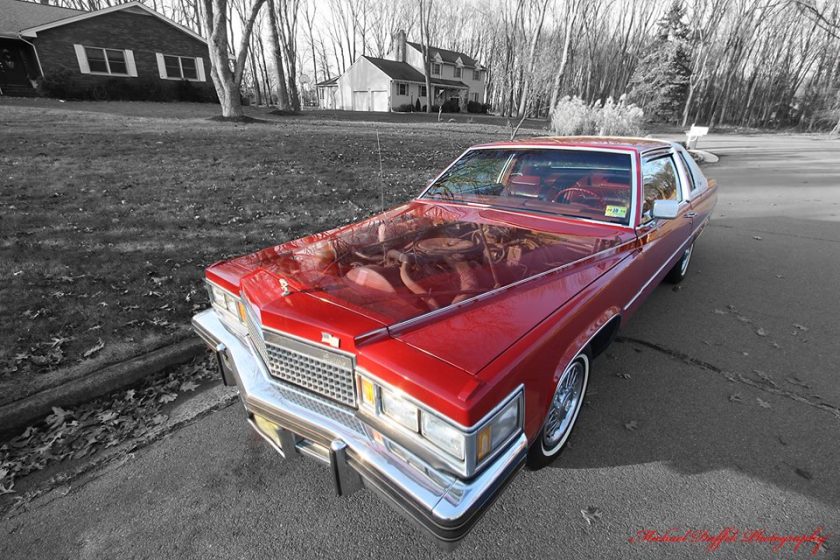
She was red, shiny, and ridiculous. She was loud, large, and fun. Layla was my dear friend’s 1979 Cadillac DeVille. And she was our ride for countless cruises, countless cruise nights on Fridays in Somerville, and some shenanigans here and again. She lived a good life while under the proud ownership of my friend Michael Duffek, but she alas had more ailments than could be addressed. Under different owners though, she’s still running. There’s something that makes these steel stallions outlast their modern fiberglass counterparts.

Michael is still highly active in the world of classic automotive, and I decided to take care to get insight into that subdivision of revival culture at the very beginning of Cruise Season. Check out his work here! https://www.facebook.com/MichaelDuffekAutomotivePhotography?fref=ts Having the Somerville Cruise season start up on Memorial Day weekend made this feel like the best possible time for this publication. Since 2012, I have been well-cultured in the world of classic automobiles, with all courtesy to Mr. Duffek. But what makes these particular metal beasts so appealing even decades, (or a century!) after their heydays? I turned to my dear friend for all the answers and insight to the Cruiser culture.

Foremost, I should denote that he is an avid fan of American-made classics. The foreign beauties are also prevalent, but let’s focus on some good ol’ Americana for argument’s sake. Besides, sociologically, the history and vintage concepts I present are limited to the bias of American history, since this is the history I grew up learning as a lifelong citizen of the States. Anyways…

Mr. Duffek articulates that a strong pressure to invest in a classic auto is to support the industry, (even though some of them no longer exist, like Studebaker, Oldsmobile, Pontiac, and Packard). It becomes your mission to bring glory and awe to your brand, even if it is not well-known. The economy may not be as sterling as it has been in yesteryears, but classic autos are a way of paying homage to the hard work of the assembly line. All are used by this day and age, and the maintenance is high, but you eliminate the large and fast-paced dealerships.

By buying into a project piece, as I’ve come to call most antiques needing TLC, you participate in a journey. You’re compelled to learn about the car, restore its original features, track its history, and eventually you end up treating it like your pride and joy. But, taking intricate care of our treasures reflects the kind of person in a retro lifestyle. The more obvious notion of a retro set of wheels concerns the building materials. Instead of driving a brand new Cadillac whose main pieces consist of plastic and fiberglass, the older grandfathers to the same model offer steel and more space.

“It’s about the connection between the person and the car. What makes it desirable to the person?” He discusses with me what a connection really is. The principle of the feeling is built on a desire to be different, to stand out in a positive light. He explains that the buyer and caretaker of these classics needs to be impacted by the car’s influence and history is in order to appreciate it thoroughly. With this passion ignited, there is definitely a subculture of cruising within the american culture, especially with the ever-constant rise of interest in antique cars. This interest dates back to 1952, as featured in a magazine “Popular Science”. Let’s even take it further and acknowledge the Youtube hit series “Jay Leno’s Garage” or the recently discontinued “Top Gear”; both of which fuel the interest we all share for the classics. The fascination, fueled reciprocally by media and passed between generations, continues to support revivalism as a whole.

There is something compelling about the entire experience of a Cruise night, much like that of Layla’s heydays. How can one miss out on the antiquated antics this Cruise season?

Posted in The Publications

The Media Hype!!!

In the last few weeks of being able to think about more than just school, I’m starting to notice media attention to the entire concept of revivalism. Some of it, admittedly, focuses on extreme movements for art deco and mid-century motifs. The demand is rising for values and styles of the eras past. Do we have a collective unconscious desire for sophistication and attention to detail found in other cohorts? I’d like to think so.

The other night, to my bewilderment, I watched the premier for Retro Wives on TLC. While this is a case of women taking on very committed, highly devoted roles of mid-century housewives. It was amazing, and sometimes relatable in their reasoning. One of the featured women disclosed that her ‘greatest sense of pride’ comes from wearing her mother’s clothing or stepping back and reflecting on a well-prepared, well-dressed table on a Sunday night. They discuss ideas like taking care of the little things, managing a home, and looking simply marvelous. Of course, we must approach topics about vintage life with a grain of salt, so to speak. Even then, people were able to be dramatic and superficial, and some things never change. In order to be the generation of pleasant social interactions, perhaps we can exclude the drama and hold onto the thoughtfulness and attentiveness.

Another spike in the media has struck me as fascinating, Check out this commercial for detergent: https://www.youtube.com/watch?v=XSdHyNxBxuE Now, detergent commercials have been around for about 90 years with the implement of sponsorship on the radio and symbolize the historically stereotyped ‘women’s work’. But what’s important here is the music. Play it over if you missed the tune. In 1955, this song was recorded by Bill Haley and His Comets… https://www.youtube.com/watch?v=XSdHyNxBxuE It simply must ring a bell now. Just as a side-note, the bassist in this group is delicious in his skills and showmanship. Pop culture is slowly inoculating us with retro messages, in essence. Which isn’t a bad thing, it’s rather swell.

Need more evidence of media and pop culture assimilating into revivalism? I promise its not just another trend or phase. Rock and Roll was always here to stay. It’s just been waiting for the right moment. Although retro and vintage does not always reference the middle of the century, another TV show, Astronaut Wives Club based on a collection of true narratives, will be airing soon, and there will be a Facebook conversation about this for both viewers and non-viewers.

So even if we were to stray farther back in time to the Swing Era, the Roarin’ 20’s, we still can identify the influence of this culture on today’s media. Bessie, a film that follows the tumultuous life of legendary blues singer, Bessie Smith, was just released about 3 weeks ago. There has been some thought concerning a possible link between the spike in 1920’s revivalism during the pre-release of The Great Gastby and the rise of this film documentary. While there is no particular way to define this connection, the suggestion isn’t half bad. The sound, which is most notably heard in the works of Scott Bradlee and The Postmodern Jukebox, has been growing in momentum in culture as well, and as promoted the consistency of our interest in the Era of Swing, Art Deco, and the first classy partygoing decade.

There is a large part of me that wonders how our modern world will adapt these ideas into one cohesive influence. These reflections on decades past are becoming more and more pronounced, but with so many different years impacting this overall revivalist movement, are we going to be as diverse as the years themselves? What a fascinating conglomerate we could be!

Posted in The Publications

Capturing Time

http://jmcs.deviantart.com/ This simple web address is home to the lovely works of a seasoned photographer… he also happens to be a dear friend. After many scenic outings and lots of pleasant conversation, I’ve compiled a short history of photography and its earlier contents. One of the claims that Mr. Shulack describes to me often is the notions of modern photography and the roles that film and print have played in years past.

He approached the topic enthusiastically, probably because he’s avid about his craft, and gathered several pieces of medium to illustrate to me his every point. All the senses are captured in pictures, Joseph explains, and that taking pictures is an experience that engages the subject and the photographer alike. “Things in the 1830’s-1850’s set up how, and why they [photography] progressed this way”

In the 1800s, photography was in its infancy, and often performed with the help of chemists or pharmacists because of the harshness of the materials used to develop pictures (daguerreotype) and the specialised preparations needed. Over time, we noticed a change in the pace that introduced glass plates, most famously found in the Bonnie & Clyde Museum, and also featured in an episode of ‘American Pickers’.  As with any other technology, it’s original form (referred to as “Wet Plates”) was rudimentary and obtrusive.  With advances in chemistry, commercial “dry chemical” glass plate came about. These were exceptionally successful because they introduced both a greater convenience to the photographer, as well as much improved separation of grey tones; the improvement trend continued this way for a bit.

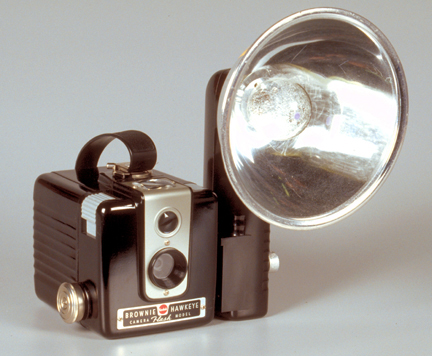
Consumer friendliness in the photography industry, Joseph says, was brought on by two major things: “cardboard and roll film, and so was born the kit for the Kodak Brownie #1”. When the consumer was finished with the roll of film, they sent it to the Kodak processing center to be developed and a replacement sent back. The ‘lost generation’ between 1900 and World War 1 signaled a rise in photography while painting declined, which indicated an “intermission in home art forms”, Shulack explains, “It’s called ‘lost generation’ because so few depictions of children were made at this time compared to prior years”. He continues to explain that, “another huge event that made photography viable to the public was technically an accident” I had to laugh because by this time I felt like I was in a specialized art history class, surrounded by rather attractive older cameras and stunning pieces of equipment that I’ve never even seen before. He spoke of Oskar Barnack, a German hiker and engineer who contracted chronic asthma later in life, and as a result couldn’t carry heavy equipment on his treks.  Mr Barnack ended up kitbashing together a camera that used conventional cinema film as still film (later known as the 35mm format).  While this was not a popular format upon its conception (mostly the place of amateur newsmen and shoestring-budget street photographers), it would become so later.  We then jumped to the 1960’s, an era where colorful pastels and interesting prints made subjects turn into pop art all over. Joseph sipped his tea and said simply, “a 35mm film camera was what made the camera accessible to millions globally”, and he sniffled his head-cold sniffle again.

Sitting next to me on my right was the loveliest piece in the most mint condition I’d ever seen. While bickering about his stuffed up nose intermittently, I flirted heavily with his box camera, a Kodak Brownie Hawkeye. He took to my unabashed admiration quickly and explained that medium-format box  cameras were popular for domestic use and became excessively desirable in the market, with its peak during the 50’s. Across from me, also grappling with my attention from the box camera was a mamiya rb67, affectionately ‘the anchor’ for being ridiculously heavy. Its significance is in its manual design even in modern manufacturing, making it the most traditionalist piece of photographer’s tools there is (short of a view camera).

After the brief history lesson and 4/5 a cup of tea, I asked one simple question, “What concepts can we derive from photography then that can revive this form of art presently?”. He sat back. Sipped more tea. Breathed a heavy sigh, and gave me a look. I sat there with my fingers ready to type out something profound and quote-able, my glasses sliding back down my nose. In an instant, I realized where I was, what I looked like, why I’m typing this. Another circle skirt tickled my shins under the table. I smiled, and he answered, “previsualization: one thing that is a huge problem with photography nowadays is digital itself”. The problem is simple; it is cost effective and the cost on photography is immeasurable. “With film, you have to understand your shot before you took it, and it cost you money per shot. [Digital photography] has devalued worth of finished images, because all digital [pictures] can be deleted, and it all takes less effort, time, and skill to capture something beautiful.”

“What my main problem is, you could say, its with the photograph being seen as something that, if taken enough of, you’ll eventually get something of value. no other form of art is like that. if you give the same monkey a paintbrush and tell him to paint a million pictures instead of taking a million photographs, he will not master pointillism or create works such as those by Rembrandt. In the past, the monkey would have never been able to create photographs like those of Galen Rowell or Alfred Steigletz.  However, this could mean a new dawn for photography as a primarily communicative tool with artistic merit, rather than an equally communicative and artistic tool as it was thought of in years past.  You never know what’s lurking around the corner, and I can see no better outcome.”

I think that Joseph has a lovely set of points here and is, within himself, rather traditionalist. The simple, effortful craftsmanship is clearly valuable to him and his own work reflects careful attention to detail. I should probably say also that each of these unique cameras offer a different image that captures a moment in time. Each perspective is unique to itself and Joseph is a leader in emphasizing their contributions to how we perceive the world through film images. It was a pleasure to take care of my first interview with such a dear friend, and I look forward to more retro road trips in his company, and with the company of his many lenses to capture time. If you can make time can stand still for even the smallest instant, there is so much we can learn from it.
Posted in The Publications

Skirts aren’t Submissive

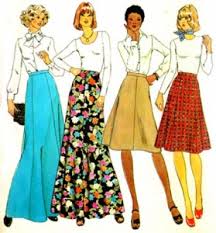
When a girl wears a skirt, she risks a lot. She takes her femininity in strides, casts aside the concerns of being ‘provocative’, and welcomes the fluttery garment that history itself denotes as hers. She takes up confidence and welcomes the unique sophistication that pants just don’t offer. Much like the prior RR post about aprons having a controversial past attached, skirts too, (up until recently), have been subject to bias and question.

When did woman have to become so rigid and tough to handle the life around them? What makes a lady in a long flowing skirt any lesser than a lady in blue jeans? Frankly, either one in this day and age can kick someone’s ass equally nicely. A skirt does not mean that a woman or girl submits herself to being dainty or objectified. That skirt can have a train the length of her hair, or it can be as skin-tight and short as all hell, but regardless, it doesn’t make her provoke anything. It, like anything else a human does, makes her self-expressive. Arguably, wearing clothing at all is just a way to turn a person into self-made expressionism. Since the early 1920s, in conjunction with the fad of self-help booklets and social change, the image of woman has been molded to fascinate, at the bias of the author.

Just the other night, I had the simple luxury of sitting in the psychology aisle of Barnes & Noble. In reading, there was a notion something along the lines of “how can people know a woman is clever and fascinating unless she looks like that?” Well, the cover of a book (all pun intended), shouldn’t be used to judge the book itself, as the adage goes. Some of the finest, most intellectually achieved women choose to ‘dress down’, and some of the strongest, most independent women choose to boast a skirt. Today’s world tells us we have to be strong, fend for ourselves, and do so in good competition to male counterparts and other females equally. A skirt is debatable, depending on who you talk to. They’re either perceived as cute or ‘ew’. Perhaps not as taboo as the apron was, a skirt still yields inhibitions for several reasons, including the old notion of ‘picturesque women’.

I’ll start by saying that skirt-wearers do not seek to conform to the idea of a ‘perfect woman’. Magazines and celebrities and media can say whatever they want, but persuasion doesn’t always decide for the person. Next, a skirt is worn in free spirit and spits in the face of provocation. We don’t identify with those who believe that pantslessness equates with unwanted attention. We do not fear the perceived consequences. The only goal of a skirt is to be comfortable and beautiful in the eyes of the wearer. Finally, whose to say that a woman in a pastel skirt can’t stand tall and confident as one in black jeans and a denim jacket? It seems like we are most susceptible to assault in skirts, but there is no way to judge a book by its cover (restated for dramatic effect). A skirt is truly an essential piece to any woman’s wardrobe. If I’ve learned anything about wearing flamboyant, flouncy bottom-wear, its that this is the time they’re able to shine again and that they only express one universal thing: we’re pleased to be females and take some interest in the history of our subspecies. Furthermore, as the title of this article suggests, skirts don’t ever indicate submission. They may have historically symbolized the stay-at-home housewife, but today they only serve as an outward expression of inner beauty.

* * * * *

Now, as for my guy friends, who are also many and plenty, they don’t seem to treat a skirt any differently. Just as the apron is in its redemption, it seems that the skirt is equally a post-hoc taboo of generations ago. One unnamed contributor suggests that “Its her behavior that really makes a guy interested, the style comes second… I mean, most women have a good sense of what makes them look great anyway”. While the response is not unanimous, this is the basic scope of what the male population contributes to this discussion. Arguably, much like how we females enjoy seeing a well-dressed gentleman, they’re not opposed to reciprocal fancifulness from their counterparts. I was delighted to hear that another masculine source was pensive on the topic, “Guys can choose to dress up or down and no one makes a fuss, so what’s the difference for girls? No problems here with a pretty lady!” It’s sometimes hard not to laugh in chatting with all my sources, especially when I’m wearing a massive circle skirt myself. Conclusively, the well-dressed person is one whose attention to detail does not go unnoticed.

Skirts, my dear readers, are not a taboo piece, but a historically significant must-have for every closet, and ultimately the greatest symbol of happiness a woman can wear on the outside.

Much Love, ~Harpie Lyn

Posted in The Publications

While the Pot Boils

I am in the middle of conducting the process for “The Sentiments of a Quill” article, and so I just wanted to keep everyone occupied in the time being. Cruise Nights are coming up quickly, so expect lots of activity in the revivalist world in the coming months. While the quill article is being created, I encourage my readers to comment on things they’d like to see written about, regardless of being politically correct. Many thanks for your patience!
~Harpie Lyn

Posted in The Publications

Chivalry: It’s Hottttt

One of the things that is often the center of interest for Retro Revivalists is the morals and values and standards that come with the vintage lifestyle. How much do I have to change in order to fit into this? The answer is not at all. Unless you’re a total jerk, in which case, I’m not so sure you should be trying so hard to fit. The standards are timeless, the ideology is that we are simple, tasteful, and respectful people as generations before us were collectively known to be. One of the largest concerns, however, comes with the idea of courtship. There are so many methods to woo the one of your dreams, but how can you impress the one whose tastes are very classic?

The answer for all genders and backgrounds is identical. There is something timeless, elegant, noteworthy, and sexy about chivalry. Why it has fallen by the wayside is something beyond what my imagination can conjure. Personally, I only acknowledge the nice guys. Of course, in today’s world full of some rather uncomfortable going-ons, sometimes we have to be more deliberate and authentic in our methods of engaging courtship. Asking for someone’s number after holding a door open or smiling is considerably creepy. The heartfelt sentiments, the thoughtfulness, and expression of real kindness is what gets to a person. We can’t continue to live in a world where hearts are too bashful to show.

So what can be done? Vintage-style courtship is expensive as opposed to today’s digitized sentiment, but it really will make all the difference when impressing anyone. Postage for letters, a nice outfit, some flowers… Sound cheesy yet? Its become so seldom expressed that frankly, the notion of anything formal being cheesy never comes to fruition. In fact, if you’re into taking a risk in order to really woo your hopefully-to-be-significant other, it would be remarkable of you to express your sentiments in an old-fashioned, timeless way. You know that cute guy whose at the gym when you are? Howsabout some yoga in the park, just for the two of you? Bring a picnic blanket and let the good times roll. Even when establishing friendships, in-person communication and good, clean, fun experiences are what the strongest bonds are made of. For the lady you see working her ass off in the office all the time? When was the last time you think she got a memo whose context wasn’t telling her something new to do for the boss? I’ll bet she’d be the happiest person on earth just to be told she’s pretty once. Perhaps the methods of spending time and energy could be the most successful in acquiring a date.

I should also take the opportunity to reintroduce the concept of casual dating. No, not hooking up, because that’s a rancid new trend of modern overemphasized sexuality. Casual dating is really just the idea of going out, having a clean, fun time as aforementioned, and meeting people with interest of finding what you like in a person. What’s so wrong with taking the time to find true love? Thinking critically, many people believe that the notion of ‘true love’ is a vintage concept. Maybe the reason why is because love, like many other rites of passage, is rushed in this society. If we took the time to slow down and explore our options and remain open to spending time with people broadly, I have confidence that human interactions and quality time spend can easily result in love. But not just love. Keeping yourself receptive to people and communications can produce the same caliber of love we hear about our grandparents and ancestors having. Now does this new style entice you?

Chivalry, my friends of all sexes and genders, is the key to establishing mutual kindness and connections. Spread the love, channel your inner hippie. Besides, I’ve notices bellbottoms and spandex are en vogue anyway! Much love, readers!

~Harpie

Posted in The Publications

Apron Revivalism: It’s like they heard me!

After a very well-articulated rant on the importance of aprons and being banned from a retro-vintage facebook page for advertising this blog, it is my pleasure to provide you with evidence that revivialism is very vibrant and alive indeed! Have any of you seen this commercial lately? https://www.youtube.com/watch?v=ZEZ6mXxNXW8

Posted in The Publications

Can it be Fixed? Then its not Broken!

My grandfather always had the nickname of ‘Mr Fixit’ for the simple reason that he was thrifty and could make just about anything work. Granted, he’s the same person who would staple and glue his trusty slippers back together, but he was capable of just about anything. He added a fireplace to his home, reupholstered his own furniture, and sewed his own pants. One of the attitudes of the cohorts that experienced the Depression or rationing know the importance of working with whatever you’ve got. If something broke, you collected the means you had to fix it as best you could. Then another commercial shift happened where its acceptable to dispose of perfectly good or lightly tarnished things of all sorts when anyone wants new. This shift was accompanied with the interest that corporations have for preparing goods that are cheap to produce as opposed to carefully crafted or handled with too much care. I firmly believe this is why there has been such a retro revival in the first place; people of this generation are realizing what value there is in hard work and craftsmanship. In this newfound appreciation, they turn to antiques to satisfy the criteria. And golly, the antiques deliver!

So, with regard to fixing things, it seems like antiques and today’s goods have the same repairability as one another. Just as anyone can refurbish a piece, modern furnitures can get facelifts. Cobblers still exist to remedy shoes. Sewing is already an essential skill for girls whose proportions aren’t accounted for in the clothing world. Furniture and houses and vehicles of all sorts undergo aging that can seem un-graceful if not tended to. There is an inevitable pattern that emerges here. If we live in a world where if broken things are consistently discarded, we become less and less tactile or thrifty. We have amazing capabilities to change and create just about anything. Over time, it seems that through this very simple observation of pop culture, we have detached from this domestic skill. So, how is its revival going? Perhaps it is not as direct as it could be, but I do see some serious attempts in the business.

Arts and crafts are on the rise. I’ve had the pleasure of meeting a college-aged young woman whose crocheting ability surpasses the skill of even seasoned needle-crafters. There are shows now on TV where the focus is on restoring old treasures and collecting interesting pieces. Entire towns on the lovely northeast corridor are praised as being the ‘Meccas of vintage wares’, which often now expand to include refurbishing services. Social media devote chapters of people to creative ideas and art forms. And people do go for this stuff. Hobbies flourish in a world where everyone yearns for leisure. We must, in order to stay lively in the likeness of a sunshiny era, seek spontaneousness and joy. Isn’t this basic idea of creativity and happiness what we’re supposed to be thriving for anyway?

It is often more work to fix things, but it conserves on the landfill epidemic and its something substantial to be proud of. One of the largest pieces of good, widely applicable advice that the depression and ration era cohorts have given us is that we should Spend Time, Not Money. Life is too short, but that doesn’t mean we should all be rushing through every task in front of us. Rushing and being overly conscious of efficiency only makes us less able to appreciate experiences and skills that we can acquire. The next time your furniture gets a scratch or your pants get a tear, roll up your sleeves and get creative! Encourage yourself to find ways to fix and improve things. Then, pass on your ideas to your friends, family, kids, and anyone else that you think could learn from it. You can pass on inheritance, but its so much more valuable to pass on skills and understanding.

So how does the vintage/retro/antique/(all other nomenclature here) tie in to this notion? Heck, Harpie; anyone can patch up some Ikea furniture and patch a pair of jeans! Certainly. The retro morale is amazing in this silly little way; it’s versatile and the values of the past can be applied to just about everything in modern living. It is not biased toward older things. But if you think about it, older stuff has already lasted this long, so it must have been created in the likeness of longevity and pride in the craft. The bottom line of this morality is timeless: Try your hand at fixing things before you leave them to the landfill. You’ll gain so much from just attempting, and it’ll save some green. Reconnecting with our collective thrifty spirit can make our lifestyle both more vintage-retro and more fulfilling all the same. ♥

Posted in The Publications

A Quick Notice

My beloved few readers,

I just wanted everyone to know I’ll be publishing one large piece monthly-ish. I anticipate that the large publications won’t take an entire moth to come up with, but I will advise you that to fill the void between posts, I’ll try to find pictures or entertaining bits to cite here for your enjoyment. Check back with The Retro Revival on March 7th for the release of my next article, “Can it be Fixed?” I’d love to hear from you all in the comment section about the virtues that you or your family/friends have passed down from the good ol’ days.

Much love, ~Harpie

https://www.youtube.com/watch?v=DxHMHrWJ2SE