Posted in The Trials of Doris

ToD: Special Edition II


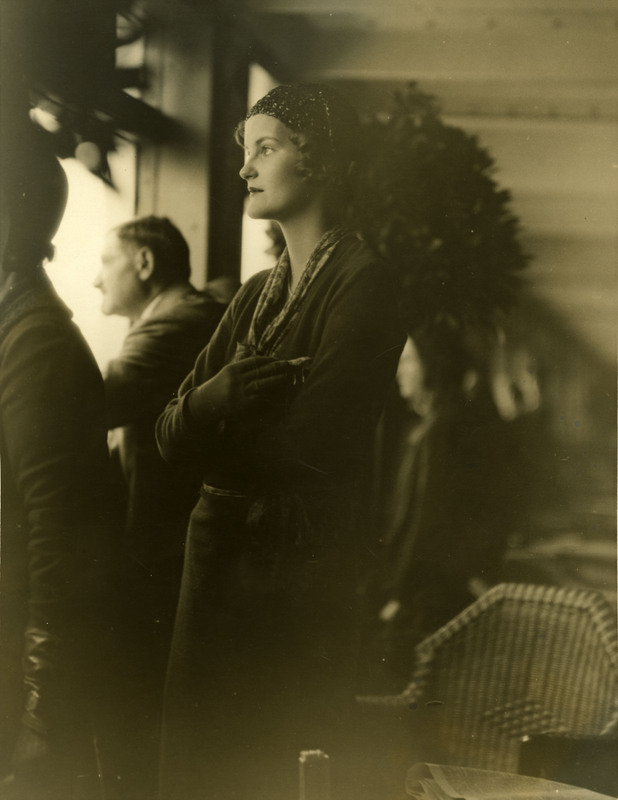
Doris Duke, 1930s
Photo of Doris Duke, dressed in long dress, gloves, and hat. Photo taken as a profile. Photographer: Montauk Photo Concern Photo by Bain News Service.

The fight for the mansion is far from over, but there is a lot more at risk here other than the historic home  of Doris Duke. The mansion is in many ways symbolic of Miss Duke, and indeed the estate as a whole; it considered the crown jewel of the Duke estate, and this happens to be her favorite property . The threat and implementation of demolition goes far beyond the removal of the home. Though there are few, if any, displays that mention Doris and her role in the preservation of the gardens, flora and fauna, some still exist within every detail of the estate. In her time, she was greatly involved with the maintenance and care of all the gardens and greenhouses on the property, and many of these have fallen into disrepair under the care of the DFF in the mid 2000’s.

Some examples:
1. The Orchid range doesn’t have a single visible specimen of the Phalaenopsis Doris, a special orchid that was developed on the estate and named after its benefactor.

2. A. The garden of nations: Dismantled after decision was made by the trustees in 2008 (savedukegardens.org/). How ironic that this too had a successful opposition and was overturned. Nothing was gained by its destruction.
B. The many cultural gardens: uncared for, overgrown (outside) and abandoned.

This brings up a special consideration. Women’s history has forgotten her. Women’s rights and empowerment groups have not heard of her. Why is this? This destructive trail of events caused by the DDCF has erased her memory and her lasting impact from further encouraging future generations of women. Why would they do this? The answer is quite logical. This woman was never one to follow societal norms of any decade she lived through. She would protest, refute, and even threaten authority to maintain her personal integrity, her land, and any causes she felt strongly about. When anyone challenges the authorities, especially as a woman, there are sure to be negative social consequences- even today!

So here’s what we can learn from an empowering woman like Doris Duke:

  1. Pursue what makes you happy, even if it isn’t what everyone else likes.
  2. Don’t compromise the integrity of your family’s name
  3. Never be influenced by the tabloids- you are the one who influences them.
  4. Be unabashedly yourself, even in the face of adversity.
  5. Don’t ever feel like you have to give up on anything you believe in, whether that means the loveliness of your estate home or AIDS research.

There have been many unfounded comments comparing Doris to another heiress, one Paris Hilton, and this blatantly disregards how in the case of Hilton, she risked getting disowned by her family and I do not follow the tabloids, but if she was or wasn’t disowned by the Hiltons is irrelevant to me. Doris, while indeed an heiress to her family fortune, was a great entrepreneur and philanthropist. She grew her inheritance from millions into nearly 2 billion dollars, all the while preserving many historic homes in Newport RI, investing and growing her fortune, and giving generously to many charities. She did all of this while maintaining her many houses, and especially her home in Somerset County. The perception of Miss Duke as a spoiled heiress of the Duke fortune is an incredibly inaccurate portrayal of her, and her personal and business ethics. She was a woman who carried herself with dignity, and valued her privacy.

The attempted and desired demolition of her home on the Duke Estate by the foundations established in her last will and testament blatantly disregards the woman that made history on many occasions, first by successfully suing her mother in order to protect J.B. Duke’s fortune and legacy, and second by being one of the first women to win a legal dispute with her second husband, (forcing him to sign a prenuptial agreement). Her influence and generosity have been felt far and wide, and removing all memory and mention of her on the estate she entrusted to the DFF is a symptom of a greater social problem. When strong women challenge the status and power of social norms they are faced with ridicule and tabloid exploitation.

Please also see the recent pictures from the DORIS drone that prove just how little damage was done to the estate house here: http://www.centraljersey.com/news/hillsborough_beacon/hillsborough-drone-s-photos-show-doris-duke-residence-remains-largely/article_e02760c2-eb07-11e5-b097-8b05242e3fa9.html?utm_medium=social&utm_source=facebook&utm_campaign=user-share

Keep Doris’s legacy and beautiful house on the map at Duke Farms! Want to help? Put a video up or a picture of you and your friends at the farms with the tags #DorisOnTheMap and #SaveDukeMansion and show your stuff! Share it with us at facebook.com/retrorevivalblog or on twitter @retrorevivalist Thank you to all our supporters!

http://www.clanorchids.com/pages/hybrids/bulbos/bdorisdukes.html

Posted in The Trials of Doris

The Trials of Doris XVI

2267ca43f7a403913c26dbde9a4d5c0c

*All mentions of HTHPC are intended to exclude Tim Stollery who on public record has stated “I keep going back to the fact that Doris Duke had properties all around the world and she considered this one to be her home. If you look at the coach barn, and Buck Dukes’ desk is there, and the walk in safe, if the coach barn is Buck Duke, then the house is Doris, and yeah maybe it’s a little odd, maybe it’s a hodgepodge… It was called a white elephant, but it’s Doris Duke’s white elephant. She’s like (pause) you look at that wall over there and Ana Case (Opera Singer), and there’s a football player and an Olympic athlete, but Doris Duke, she’s known throughout the world, and we have her house here. I’m sorry but in my opinion, and I respect everybody else’s opinion, I respect the work that all the folks at Duke Farms do, but I’m gonna vote no, that we can’t knock down this house, we should fix it up so that we can teach future visitors, we have lots of visitors that come to Duke Farms for the environmental stewardship, and it’s an amazing place, but in my opinion it would be better if we kept the mansion, so I’m gonna vote no..”
“I vote no, and history will judge us, and I think this is a mistake guys.”

We come to you, our readers, with somber, yet hopeful spirits. We have been awaiting the court decision by Judge Yolanda Ciccone and upon reading her decision we found out that she DENIED the case made by D.O.R.I.S. Furthermore she stated that; “DFF’s expert advised HTHPC on all seven criteria…through Mr. Catania and Dr. Cooperman’s testimony, as well as DFF’s councils closing argument, the record below is filled with bases that support HTHPC’s decision making process” (Ciccone pg. 4), They did not. Nor did they provide documentation proving their claimed “decade of research for alternative uses”. If the statements made by these individuals during the proceedings had documents supporting their claims then one could make such an argument, but as a witness to both the proceedings of which the record mentioned was made, and to the egregious amount of denial being exhibited by judicial parties involved in the appeal process that D.O.R.I.S. is in, I can say with confidence that, no, the DFF and the individuals representing these bodies did not go the extra mile and find, or present to the courts, evidence of their claims, and even went so far as to fabricate events that never occurred on the record.

Furthermore, Ciccone stated; “HTHPC had adequate basis in fact and opinion to approve the demolition,” They did not, at least not where documentation and preservation of fact is involved, “and acted in conformity with the appropriate law when approving DFF’s application. It would be inappropriate for the Court to substitute its own judgment of the evidence for the judgment of local citizens with an intimate knowledge of the community’s interest in preserving historic sites” (Ciccone pg. 4). The HHTHPC may have intimate knowledge of interests of the Somerset county community, and it’s interests, but William J. Willard Esq. so eloquently stated, “It doesn’t matter what Doris wanted. It doesn’t matter what the general public thinks” (before the final town meeting in which HTHPC voted to demolish Doris’s home, 6:19-6:26). Despite their presumed intimate knowledge of the interests of their voting public, they chose to not only disregard the wishes of the woman who donated land where Somerset County College stands today (Doris Duke), but they also have disregarded the voice of their own citizens.  The community of Somerset County is VERY interested in preserving the Duke Mansion, yet the HTHPC has ignored their voices.

A member of the HTHPC even felt like dozing off during the proceedings, “Plaintiffs contend that a member of HTHPC was sleeping during the hearings. If this council member were to have been asleep during the hearings, it would be prudent that someone in attendance take immediate action to notify all involved. It is improper for the Court to overturn HTHPC’s decision on the basis that certain individuals claim that a member was sleeping ” (Ciccone pg. 4-5). It would have also been prudent of the council member to not have fallen asleep in the first place, not only that, speaking out of turn would also have evoked a scolding from HTHPC council upon the person who acted “prudently by notifying all involved”. In this same line of reasoning, if the public is expected to alert all involved to the matter, yet “the decision to allow for public comment is discretionary” (Ciccone pg. 5& N.J.S.A. 10:4-12 (a)) which legal position then takes prescient in this case? If public comment being permitted is discretionary then how can the public bring to council’s attention that a council member has fallen asleep during proceedings?

Doris’ home is again in the crosshairs of the foundation that she had created upon her death, and at the moment there is nothing preventing the demolition of her historic, and very unique home. With all of the oversights that we as a voting public, and many of our readers as members of the Somerset County community, and broadly speaking, American voter, it would be refreshing to see a federal investigation of The DFF, and the DDCF as part of this process as a means to verify the goings on in these organizations.  One can hope, but on that bittersweet note I leave you with this thought,  “Our greatest glory is not in never falling, but in rising every time we fall.” Confucius.

Despite the opinion of Judge Ciccone, and the actions of the HTHPC, DFF & DDCF, history will remember their actions, and likewise history will remember that D.O.R.I.S. stood up against these bodies, that everyday people of many ages, political positions, localities, cultures, and beliefs came together to fight injustice that the powers that be are letting happen.

The mansion was demolished within 12 hours of the ruling, with a black Mercedes and dozens of security vehicles surrounding the doomed landmark. Is this the end? Certainly not. This simply means that the WORLD IS WATCHING to change the second life of the Duke family legacy. After all, in loss we find new beginnings. DORIS and its members will continue to fight for the justice of the Duke legacy. Thank you for your dedicated reading. Stay curious, darlings.

10/15/15 HTHPC meeting: https://www.youtube.com/watch?v=qIN3hLSydEg&feature=youtu.be
Save the Duke Mansion(Director’s Cut): https://www.youtube.com/watch?v=bvssmxkweGI
Click for: Judge Ciccone Opinion


Posted in The Trials of Doris

The Trials of Doris: Part V

Thursday night, the hotly anticipated debate in hopes to save Duke Estate’s beloved main residence, resulted in a blunt postponement until the 15th of October. The DCC Picnic was a lovely little success, and we had the pleasure of meeting many wonderful kindred spirits one at a time to present their interests in the property and shared our fruit tarts! For the future, we expect another charming event for Miss Duke’s birthday in November. In the meantime, so much has occurred in the last 48 hours that the Retro Revival staff has made every effort to publish as much of its contents as possible.

First off, there was much discussion about a preexisting bias that resonated with the chamber, which was only aggravated by the township attorney’s gestures and apparent impatience. The Duke Farms Foundation did not present any further witnesses to plead their case for demolition, keeping their total testimonies to two: the executive director’s and the hired architectural historian’s. The DORIS group came prepared with over 10 prepared scripts and dozens of concerned residents eager to speak their pieces. The attorney representing, Mr. Brook, was able to get through the first 4 of said testimonies, but not without severe cross-examinations from the foundation’s attorney and the scrutiny of the township attorney. Most insulted were the two factual testimonies, including Miss Elisabeth. She was the first fact-witness to be called to testify. When she claimed to work closely with Doris Duke, she was taken as a joke, her comments cited as heresay and the township attorney summarily made a comment boldly expressing that it doesn’t matter what Doris wanted.

The others who prepared speaking points traveled from near and far to attend this meeting, and once again were denied the open floor for comments. Questions directed at the witnesses were permitted.

Most troubling, according to consensus of the Retro Revival writers, lies in the double standard that has been established favoring the foundation’s request to demolish. This suggests bias, which echoes in other components of the latest trial. It seems like, through the cross examination of the foundation’s attorney, there are several contradictions that raise question of the integrity of the foundation’s request. First, no tangible evidence or exhibits were provided from Duke Farms describing any research done on future adaptive reuses. By legal definitions, since the foundation expressed their responses ‘to the best of their knowledge’, this is heresay. The questions that probed this discussion were seeking to find substantiated, publicized evidence of their claims of allegedly producing said research after spending 10 years on the project.

The double standard could be identified and felt by members of the DORIS group immediately. While this community group was prepared with a list of the town ordinance items to cite in their speeches, the foundation’s prior testimonies did not cite all of the ordinance’s items, and there is argument that there is insufficient information to permit demolition. The idea of cherry-picking information out of the probated final will and testament of Doris Duke was also suggested. While the foundation’s comments deciphering the will were permissible by the township, the DORIS group’s same citation, from the same probated will was met with disdain from the foundation with a dismissive, ‘it does not matter’.

The questions remain: How long will this go on? How much more can this community organization be deprived of a due, just, and truly objective trial? When will the local commissions truly reflect the interests of the population? We at the Retro Revival have high hopes and expectations that this will find peace in its standing, and that the concept that DORIS wants to stress the most, partnership, is embraced with open arms by the foundation. How can anyone in good conscience forbid the people to feed into natural curiosity, respect, and love for ages past? We will watch closely for the next chapters of the Trials of Doris. The Duke legacy will never truly end with the great revival of the community that Doris always came home to.

Posted in Manny's Music Column, The Publications

P 90’s; why I love them, and why you ought to try them.

1952goldtop080-1

A P 90 pick up is an electro magnetic pickup that was designed for installation in Gibson’s 1948 ES-300*. They are characterized by several traits, having a single coil cut combined with traditional humbucker warmth, hum in both the neck and bridge positions(hum cancelling in the middle), and having the kind of output to really push a tube amp into a proper overdriven (not distorted) tone.

My introduction to P 90’s happened when I went to the Berklee summer guitar program a while back, my roommate had a 1956 Gibson Gold top Reissue that I had the pleasure of trying out for a short while, while not a fan of Gibson scale length this guitar was pretty well set up and played beautifully. Hearing how my friends pickups responded when plugged in, and the warmth and presence that this guitars electronics had simply blew me away!

Fast forward to 2012 (ish), around a week or so after I had acquired one of my favourite T style guitars, and in the same shop where I acquired that T style guitar I see a white Fender TC-90, an oddity among their usual sort of guitars. It was wired with a set of Seymour Duncan P 90’s and I was immediately hooked! I had to sadly let this one go, but I found another TC-90 in vintage white years later. When I got around to using it for my live shows, as well as for recording, I found that the pickups had a special way of pushing an amplifier into a overdriven gain stage, and getting some very delicious tones out of my rig.

* By 1940, Gibson introduced the first in a series of new and improved electric guitar pickups, culminating in 1946 with the P-90, a powerful single-coil design with two Alnico III magnets (aluminum, nickel and cobalt) and individually adjustable polepieces. In 1948 Gibson put two pickups on the ES-300 model, giving guitarists a broad new palette of tones to choose from. http://www.gibson.com/en-uk/Divisions/Gibson%20Gear/Pickups/History/

Posted in Manny's Music Column, The Publications

The blues: why does feeling low feel so good?

In honor of the passing of the great late B.B. King I thought it fitting to start my contribution to this wonderful page with a reflection on a visceral topic; why the blues feel so good! My exposure to blues music occurred at a pivotal time of my life, the angst ridden era of adolescence. There may be no better soundtrack to the flux of hormones one experiences at this phase of their lives. The blues being historically born from suffering, and being the result of having a musical outlet for such suffering makes for great synergy with the experiences of the average teen.

There is a magic in the blues; turning deep-rooted sadness into a beautiful piece of music and poetry. This is why when I listen to the blues there is a sense of absolute joy in the experience, a visceral release of whatever sadness would be affecting me at that point in my life. Entering the realm of performing this music, adds another layer to the experience, not only could I partake in the experience of the writer of whichever standard I would be playing, but the improvisational nature of this music made it possible for me to actually be creative within that context. It became very much like finding my inner voice, a way to communicate without the need for words, even leading me to my own voice as a singer. Furthermore, the experience of jamming with a group of strangers (and well I might add) with whom you share a love for blues/jazz/rock, but  all share different experiences from life, and how long they have experienced life; for that matter.

Blues music at its core is the pinnacle of catharsis, taking every sadness one has experienced and translating it into music and lyrics that embody ones pain and sorrow, yet manifest itself into an expression that is akin to joy and freedom, a release from ones burdens; even if it it’s for only a bittersweet moment.